

PhD

1. YAO BO
Yao Bo is currently pursuing a PHD, with research entitled “Comparative study of the Co-doped and un-doped NiOx thin film as a hole transport material for application in high efficiency and stable Inverted perovskite solar cells”. The project focuses on doping to enhance the electrical and chemical properties of NiOx thin films, reduce interfacial defect density and suppress non-radiative recombination losses. This enables more effective energy-level alignment, improving power conversion efficiency (PCE) and long-term operational stability, thereby providing a strategy for the development of highly efficient and stable inverted perovskite solar cells.
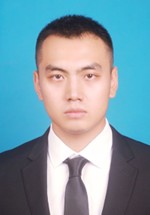
2. FU YIFU
Fu Yifu, currently pursuing a PhD, with research entitled ‘Based on the principle of electroluminescent (EL) in pressure sensors.’ The project focuses on the development of a multilayer-film structure with solution-processed fabrication and good fit on curved surfaces, and that emits light under a pressure stimulus, which is expected to be applied to robots’ fingers and prosthetics with tactile capabilities.

3. SYED MUZAMIL AHMED
Syed Muzamil Ahmed, currently pursuing a PhD, is researching “Intrinsic Stretchable Strain Sensors Using Graphene and Carbon Nanotubes for Human Physiological Motion Monitoring.” His work focuses on developing conductive inks based on graphene nanoplatelets (GNP) and carbon nanotubes (CNT) for screen printing applications. Using the developed ink, strain sensors of various geometries are fabricated to investigate the effects of nanomaterials and geometrical configurations on sensor sensitivity. Additionally, COMSOL Multiphysics simulations are employed to compare and validate experimental findings, aiming to advance the design of high-performance strain sensors for wearable electronics and healthcare monitoring
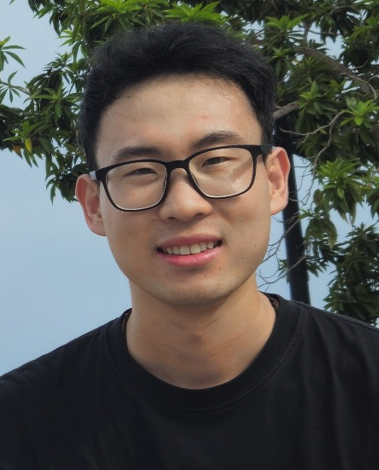
4. SUN BO
Sun Bo is currently pursuing a PhD at the Universiti Malaya, with research entitled “Development of an AI-Enhanced Multimodal Wearable Sensor for Continuous and Predictive Glucose Monitoring.” The project focuses on integrating a minimally invasive microneedle-based sensor with real-time measurements of interstitial glucose, heart rate, and skin temperature to enable more reliable monitoring of metabolic fluctuations. By incorporating lightweight machine-learning models, such as CNN-BiLSTM and Tiny-LSTM, for on-device prediction, the system aims to forecast short-term glucose trends and provide early warnings of hypoglycaemia and hyperglycaemia. This work supports the development of a low-cost, intelligent, and clinically scalable continuous glucose monitoring (CGM) platform, thereby improving diabetes management and advancing next-generation wearable health technologies.

4. MOHAMAD SYAFIQ BIN FADZIL
Mohamad Syafiq bin Fadzil is currently pursuing Phd in collaboration with Mimos Berhad and Intel entitled ‘Package Level Co-Design Framework for Inorganic Synaptic Transistors Integration in Heterogeneous for Better Synaptic Learning and Memory Computation’. His project focuses on establishing a TSV-aware integration framework for inorganic synaptic transistors. His project highlights lab-scale synaptic transistors with scalable vision via a humble characterisation of a 6x6 matrix. His work focuses on implementing neuromorphic computing in line with industry reliability standards.
MSc

1. ZONG ZHAOJI
Zong Zhaoji is currently pursuing an MSc, with research entitled "Single-Electrode Mode Triboelectric Nanogenerator". The project focuses on the fabrication of triboelectric nanogenerators and on improving the performance of triboelectric nanogenerator output.
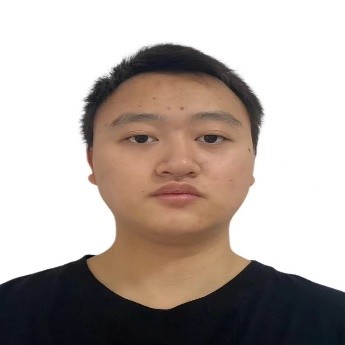
2. LI FEIYANG
Li Feiyang is currently pursuing an MSc, with research entitled “Design of Logic Circuits Using Graphene Nanoribbon Field Effect Transistors”. The project focused on exploring the structure and performance behaviour of GNRFETs, methods for fabricating GNRFETs and designing logic circuits using GNRFETs

3. SYAHIRAH UMAIRAH BINTI MAHADI
Syahirah Umairah Mahadi is currently pursuing an MPhil, with research entitled “Elucidating the Water Absorption Behaviour Dependent on the Functionalized MXene to Improve the Performance of Wearable Moisture Sensor for the Chronic Wound Monitoring". This project focuses on optimization the functionalization of MXene to improve its water adsorption properties, thereby enhancing sensor flexibility, sensitivity, and overall effectiveness in real-time healthcare applications.
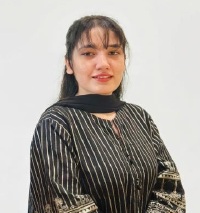
4. FARAH HUSSAIN
Farah Hussain is currently pursuing an MPhil with research entitled “Synthesis and Fabrication of Metal Oxide-based Flexible Humidity Sensor". This project focuses on developing a resistive humidity sensor based on a Titanium Dioxide (TiO2) and Polyacrylic Acid (PAA) composite. The TiO2 nanoparticles are first synthesized via a hydrothermal method, then mixed with PAA to formulate a sensing ink. This composite material is deposited onto a PDMS substrate patterned with Interdigitated Electrodes (IDEs) for device fabrication. The sensor is evaluated by measuring resistance changes across varying Relative Humidity (RH) levels, followed by real-time monitoring tests and structural characterization to validate material properties and sensitivity.
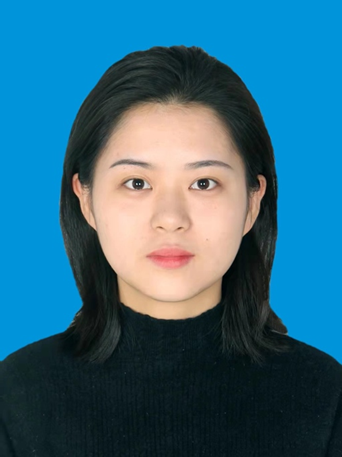
5. ZHENG SHIXUN
Zheng Shixun is currently pursuing an MEngSc, with research centred on biomedical rehabilitation engineering. Her project investigates the effects of specialized diabetic insoles on lower-limb muscle activity, using surface electromyography (sEMG) to quantify neuromuscular responses and gait-related biomechanical changes. Beyond rehabilitation assessment, she is also interested in the development and application of biosensors for biomedical monitoring, particularly technologies designed to support diabetic patients through improved mobility, pressure redistribution, and real-time physiological feedback. Her work contributes to advancing wearable sensing systems and evidence-based rehabilitation strategies for diabetes-related complications.
Last Update: 13/07/2026